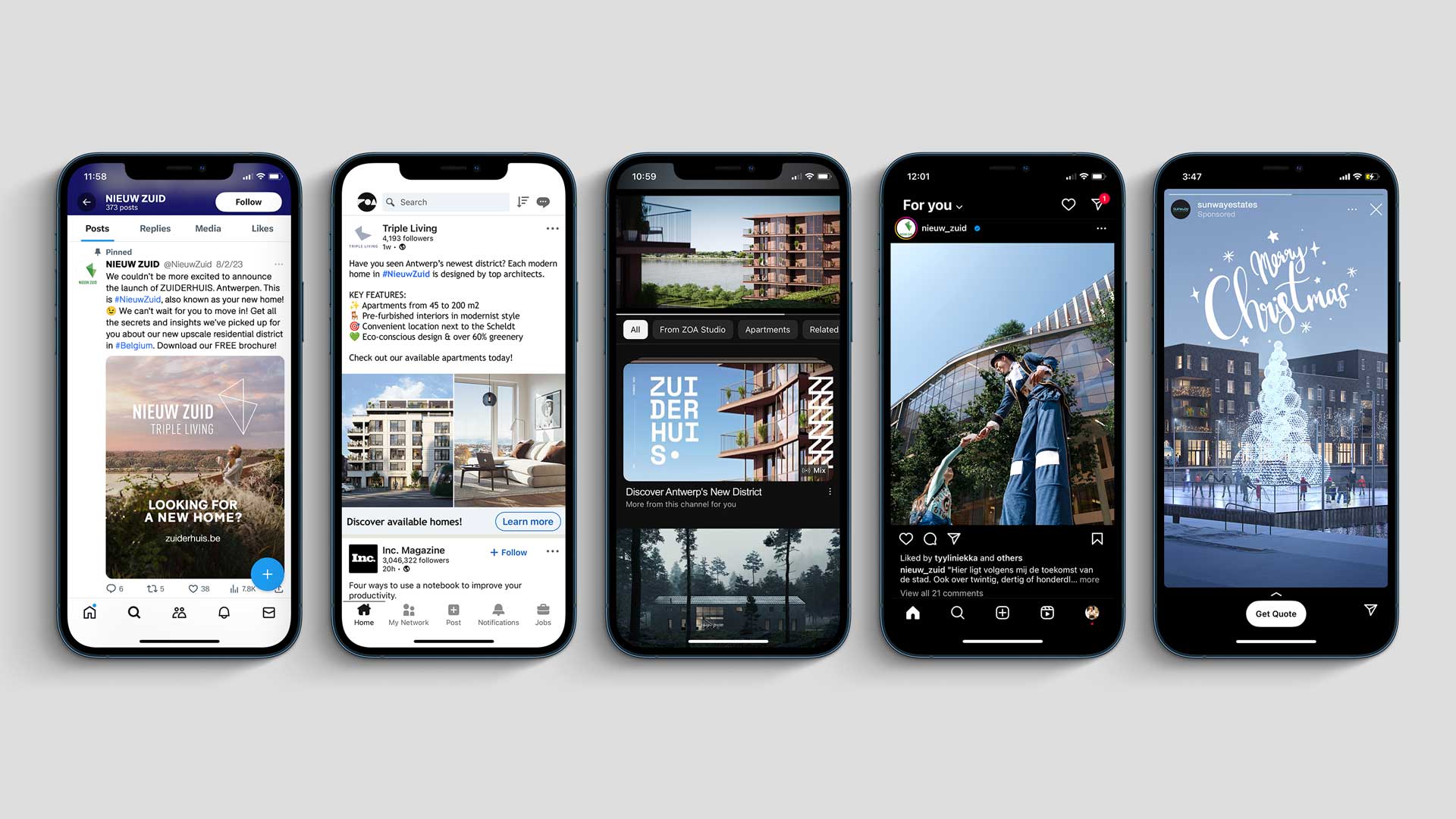

For decades, real estate has thrived on familiarity, warm handshakes, local contacts, and trusted brokers who know everyone worth knowing. It was a system built on proximity rather than reach. But as global capital grows ever more fluid, and digital platforms such as Facebook, Instagram and YouTube dissolve borders, reliance on personal networks alone is quietly becoming not just a constraint, but a risk in a borderless economy.
In some markets, developers with purely domestically focused strategies are seeing sales slow as they compete for a finite pool of local buyers and are constrained by local market conditions. Meanwhile, international investors, a steadily expanding cohort, are increasingly comfortable transacting across continents. While geography remains a factor, developers now find their competition and buyer pool extending beyond city limits or national borders into truly global territory.
In the United States alone, overseas buyers purchased 78,100 existing homes between April 2024 and March 2025, marking a sharp 44% increase year-over-year, though the absolute number remains well below earlier peaks. The total foreign investment volume reached $56 billion, a 33% rise from the prior year, with international buyers paying a record median home price of $494,400. In Germany, foreign investment strengthened notably as well, with a 26% increase in the first half of 2025. Dubai’s real estate market is characterized by record-high sales volumes, with residential sales reaching AED 120 billion in Q1 2025 alone, an increase of 9% compared to the previous year, and Q3 2025 seeing a record AED 170.7 billion in transactions, highlighting global appetite for prime property.
The relevance of traditional marketing is shifting: its role remains in shaping local prestige, but its reach and impact must now be amplified to sustain growth. Developers often fail to recognise that buyers now discover properties the same way they discover fashion, sneakers, or watches, through content and search. Today, competitiveness depends on fluency in a new language: one spoken in algorithms, attention, and brand equity. The companies that learn to market with digital intelligence, develop international appeal, and deliver content at scale to build reputations across borders, will find they can reach more people, at lower cost, and with greater credibility.
Real estate marketing has always been about trust. The difference is that now, trust must be earned online, through consistency, visibility, and attention. The next generation of buyers researches, negotiates, and even signs contracts digitally. They expect transparency, proof and structured, effective communication. Developers that continue to rely on outdated forms of persuasion risk sounding provincial in an increasingly cosmopolitan market.
Our review of campaigns from JW Marriott Residences to Central Park Tower, from Danish residentials to UK seaside resorts—reveals a consistent gap: the technology exists, but the storytelling does not. Too many developers still treat digital content as a checklist item: transactional, low-effort, and ultimately unable to cut through the digital noise. The result is a loss of prestige and missed opportunity in the very space where reputation now lives, the vertical screen.
Advances in AI and virtual production will soon allow buyers to experience properties with near-physical presence anywhere in the world. The question is not whether to adapt, but how elegantly and intelligently to do so.
Today, we continuously examine how real estate brands can think and act like global ones, moving beyond digital presence to digital persuasion. Drawing on two decades of experience working with developers, investors, and new-build, off-plan developments, we outline frameworks that have helped firms multiply qualified leads and, in some cases, sell out off-plan projects in a single day using only digital assets and brand equity.
The future of real estate marketing is not about being online. It is about being believable, consistent, and credible on the global stage.
For new business inquiries, please email us at hello@eptwo.com.